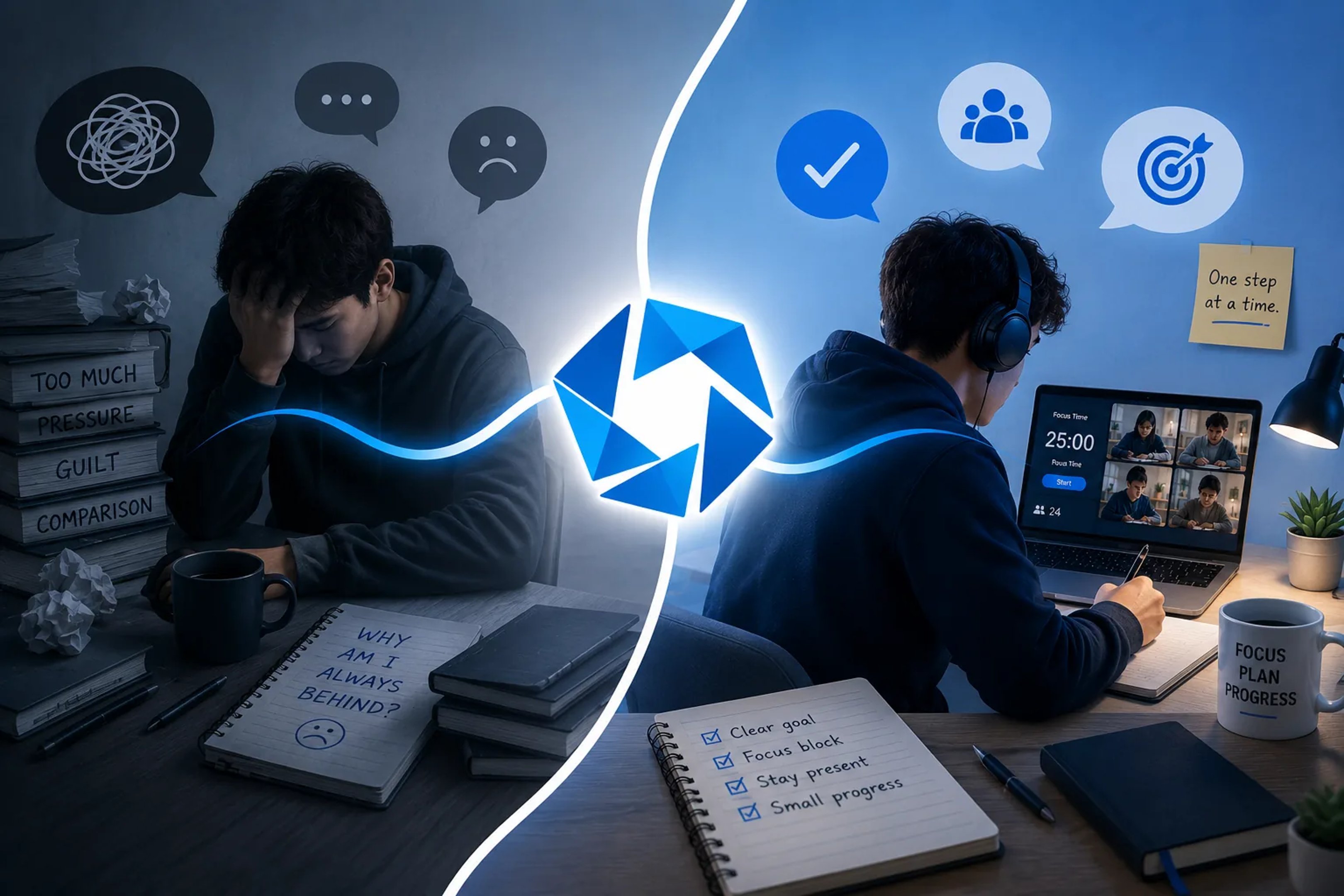

Body doubling has become a popular study strategy because it solves one of the most frustrating student problems: knowing you need to work, but struggling to actually begin.
If you have ever opened your laptop, looked at your assignment list, and somehow ended up doing everything except the assignment itself, body doubling may help. The idea is simple. You work while another person is also working. They do not need to tutor you, supervise you, or even talk much. Their presence helps make the session feel real.
For many students, that small shift is enough to reduce procrastination, lower the friction of starting, and make it easier to stay with a task longer than they usually would alone.
This guide explains what body doubling is, why it helps some students so much, what actually works in practice, how camera-on and camera-off sessions compare, and how to use online study rooms without turning them into background noise.
What is body doubling?
Body doubling is a focus method where you do a task in the presence of another person who is also doing a task. The other person is not there to grade you or manage your schedule. They are there to create a sense of shared working time.
In student life, body doubling can happen in a library, on a video call, in a virtual coworking session, or inside an online study room. Sometimes people briefly state their goal at the start. Sometimes they just join, turn on a timer, and begin.
The reason the method feels surprisingly powerful is that it changes the emotional texture of studying. Work feels less abstract when someone else is visibly doing their own work at the same time.
Why body doubling helps some students
Body doubling is not magic, but it can help for clear reasons.
- It creates a start signal. Joining another person for a session makes it easier to move from intention to action.
- It reduces isolation. Hard assignments often feel heavier when you are alone with them.
- It adds light accountability. Even a low-pressure shared session can make quitting early feel less automatic.
- It makes time feel more structured. A room, timer, or visible partner turns vague study plans into a real block of work.
- It helps with emotional regulation. Calm social presence can make stressful tasks feel less overwhelming.
This is one reason body doubling is often discussed by students with ADHD or executive function challenges. But it is not only for ADHD. Plenty of students benefit from it simply because modern studying is full of friction, distractions, and low-motivation days.
What actually works with body doubling
The most effective body doubling sessions are usually simple. They do not rely on constant talking or intense monitoring. They work because the structure is clear.
Here is what tends to help most:
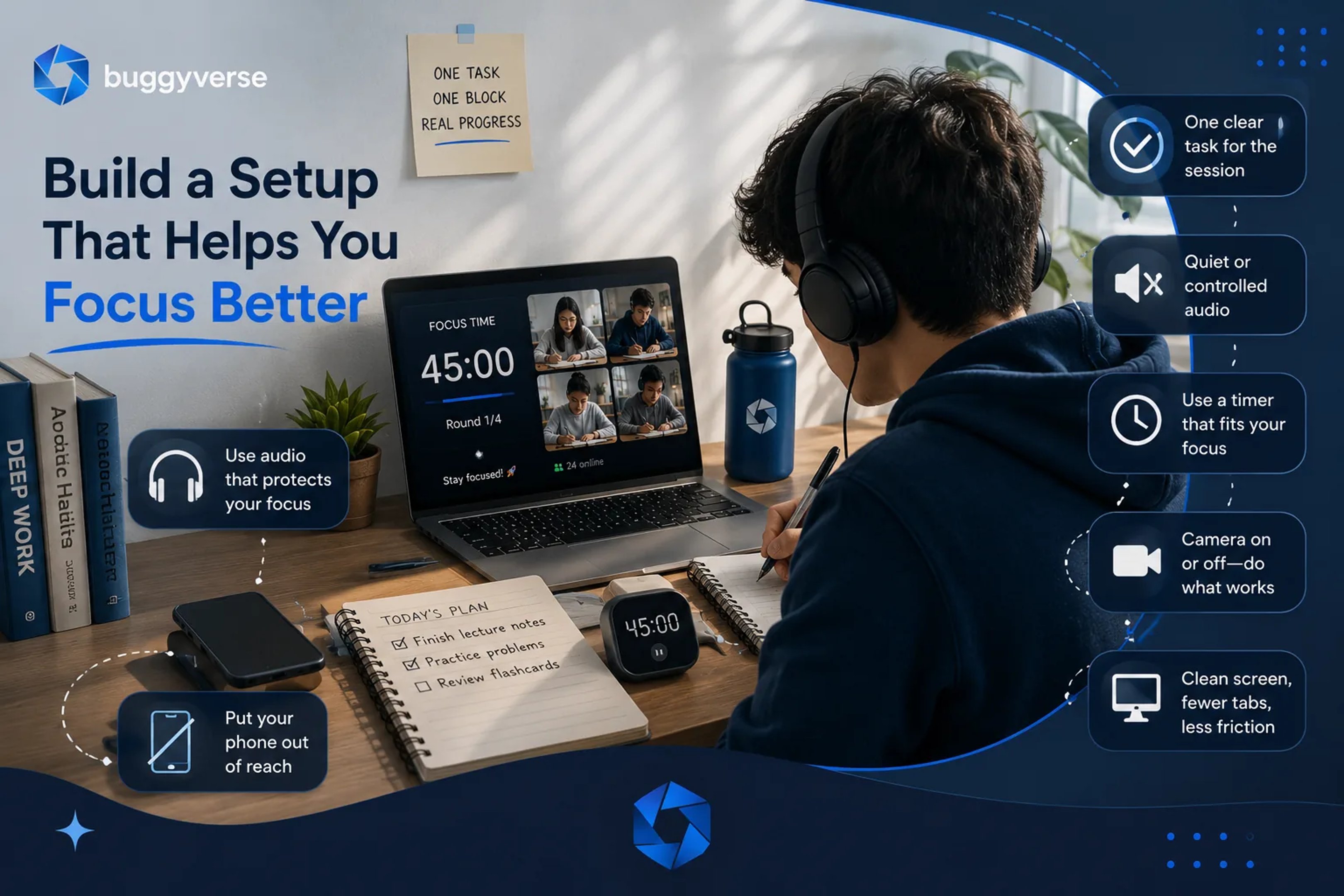
- Choose one specific task before the session starts. “Study chemistry” is too vague. “Finish pages 42 to 49 and answer the review questions” is much better.
- Use a defined time block. Twenty-five, forty-five, or sixty minutes usually works better than an open-ended promise to study “for a while.”
- Keep the other person focused on their own work. The point is shared presence, not constant conversation.
- Use short check-ins, not running commentary. A quick start goal and end-of-block update is enough for most sessions.
- Repeat the setup consistently. Body doubling gets stronger when your brain starts to associate the environment with real work.
In other words, what works is not just the person. It is the combination of presence, clarity, and time boundaries.
Camera on vs camera off
Students often assume body doubling only works if everyone is on camera. That is not always true.
Camera on can help when you need a stronger feeling of presence. Seeing another person sit down, open their notes, and stay in the session can create a more concrete accountability effect. For students who struggle most with starting, this can be useful.
Camera off can work better when you feel self-conscious, overstimulated, or easily distracted by faces on screen. Some students focus better when they know other people are there but do not have to manage how they look or whether they seem productive every second.
The best option depends on what gets you into task mode with the least friction. If turning your camera on makes you anxious, then camera-on body doubling may become another barrier. If camera off makes the session feel too easy to ignore, then it may not give you enough structure.
A useful middle ground is to keep your camera on during the first minute or two, set your goal, and then switch to whatever level of visibility helps you concentrate.
How to use online study rooms for body doubling
Online study rooms are one of the easiest ways to use body doubling consistently because they remove the scheduling burden. You do not have to text a friend every time you need help starting. You can join a room where other students are already there to focus.
A good online study room for body doubling usually has:
- a clear focus-friendly atmosphere,
- simple session timing or visible work blocks,
- low-pressure social presence,
- enough activity that the room feels alive,
- rules that keep chatter from taking over the session.
When you join, do not overcomplicate it. Pick your task, silence the extra tabs, put your phone out of reach, and use the room as your commitment device. The room does not do the work for you, but it can make it much easier to stay in the work once you begin.
Common mistakes that make body doubling less effective
Body doubling helps most when it stays practical. It usually gets weaker when students accidentally turn it into performance or procrastination.
- Using the session to avoid choosing a task. If you join without deciding what you are working on, you can still drift.
- Talking too much. A little social warmth is fine. Constant chatting breaks the effect.
- Choosing blocks that are too long. If ninety minutes feels impossible, start with twenty-five or forty-five.
- Treating camera visibility as the goal. Looking studious is not the same as making progress.
- Leaving distractions fully available. Body doubling helps, but it does not cancel out nonstop notifications.
- Expecting instant perfection. The first few sessions may simply help you start faster. That still counts.
Who body doubling helps most
Body doubling tends to help students who get stuck at the beginning of a task, lose momentum when working alone, or feel overwhelmed by large assignments. It can be especially useful during homework catch-up days, reading blocks, writing sessions, problem set practice, and exam review.
It is less helpful when your task is so unclear that you really need planning first. In that case, spend five minutes breaking the task into a smaller next step before joining a focus session. Body doubling works best when there is at least one concrete thing to do.
A simple body doubling setup to try this week
If you want to test whether body doubling works for you, keep the experiment small.
- Choose one assignment you have been avoiding.
- Define one realistic next step.
- Join a focus room or work alongside one other person.
- Set a timer for twenty-five or forty-five minutes.
- At the end, write down what you finished and whether starting felt easier than usual.
You do not need a perfect routine on day one. You only need enough structure to compare one body doubling session against one solo session. For many students, the difference is obvious pretty quickly.
Final thoughts
Body doubling works best when you use it as a gentle structure, not a rigid productivity performance. The goal is not to prove that you can sit on camera for hours. The goal is to make it easier to begin, stay engaged, and come back again tomorrow.
If studying alone keeps turning into delay, avoidance, or half-focus, body doubling is worth trying. And if you want an easy way to put it into practice, join an online study room or focus room where other students are already there to work. A calm shared session can be enough to help you finally get started.