
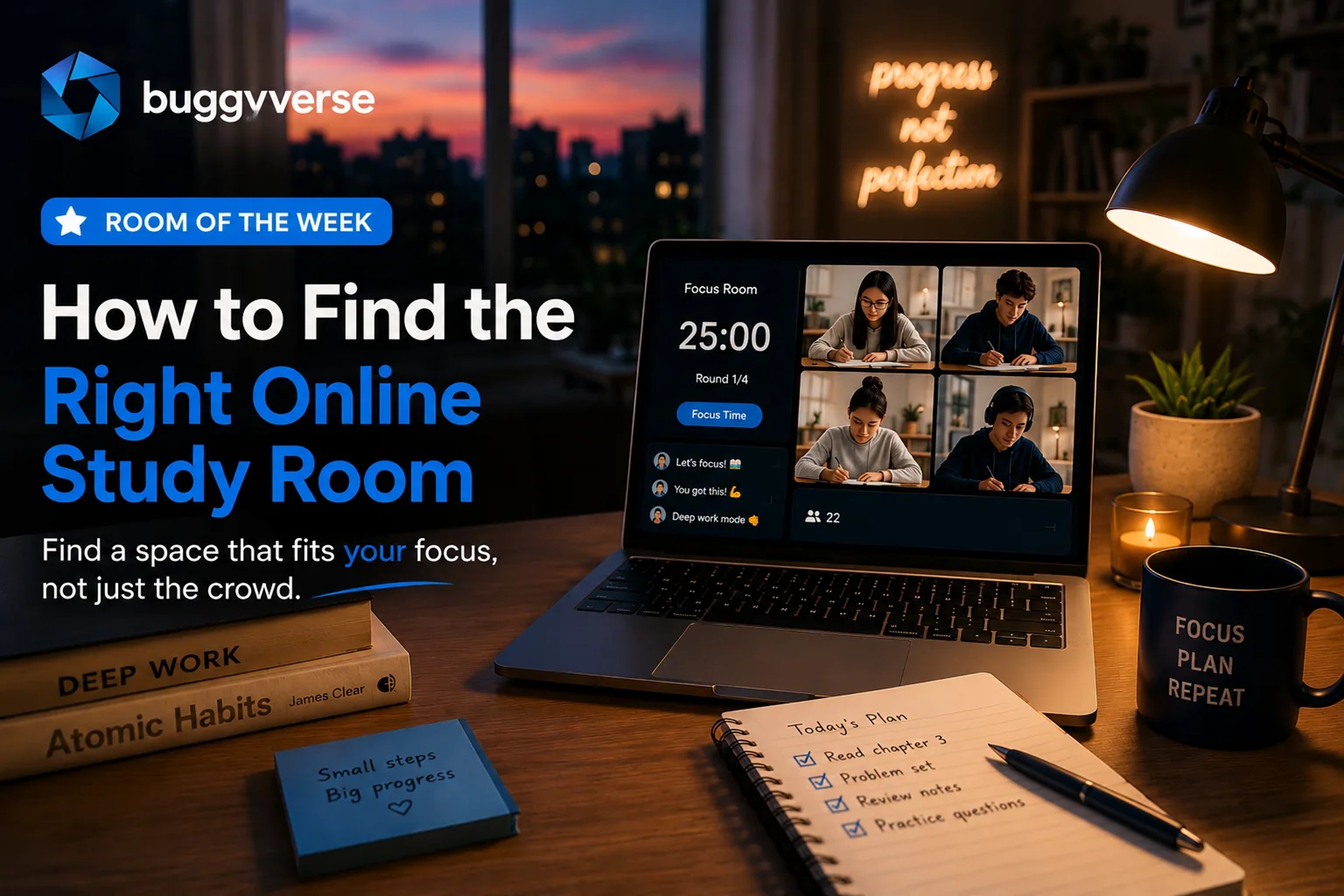
# Room of the Week: How to Find the Right Online Study Room Finding a good online study room can save you a lot of trial and error. Instead of bouncing between random rooms and hoping one feels right, you can use a simple checklist to find a space that matches your study style. That is the idea behind a **Room of the Week** approach: each week, you highlight one room that is especially useful for a certain kind of student, task, or routine. Even if you are not looking at an official spotlight page, you can use the same method yourself whenever you join a new focus room. ## Why the right room matters A room is not just a video tile or timer. It shapes how easy it feels to start, how distracted you get, and whether you want to come back tomorrow. The wrong room often creates friction: - The timer rhythm is too short or too long. - People are active in chat when you need silence. - The energy feels too intense when you are already stressed. - The room is dead when you wanted accountability. The right room does the opposite. It makes studying feel easier because the environment supports the work you already planned to do. ## What a student should look for first When you join a room, check these five things before you commit to staying there for the whole session. ### 1. Match the room to your task Different tasks need different environments. - If you are reading or reviewing notes, a quiet low-pressure room may be best. - If you are solving problem sets, you may want a room with stronger accountability and clearer work cycles. - If you are catching up after procrastinating, you may need a room that helps you start quickly instead of overthinking. A good rule is this: **pick the room that matches the work, not the room that looks most popular**. ### 2. Check the pace Some students focus best in 25-minute sprints. Others need 50-minute or 60-minute blocks before they settle in. Before staying, ask yourself: - Does this timer rhythm fit the task I am doing? - Will the break timing help me reset, or will it interrupt my flow? - Can I imagine doing two or three cycles here without getting annoyed? If the pace fights your brain, switch early. ### 3. Read the room energy Room energy matters more than people expect. Some rooms feel calm and steady. Others feel social, lively, or highly structured. None of those are automatically better. The best choice depends on what you need today. If you are anxious, a quieter room may help you settle. If you feel sleepy or unfocused, a more active room can give you momentum. ### 4. Notice whether the room helps you start The first ten minutes are a clue. Ask yourself: - Did I begin work quickly? - Did I keep reaching for my phone? - Did the room make me feel more grounded or more restless? A good room helps you cross the starting line fast. ### 5. Look for consistency, not novelty Students often waste energy hunting for the "perfect" room every day. A better strategy is to find two or three reliable rooms for different situations. For example: - one room for deep work - one room for lighter homework - one room for stressful exam weeks when you need extra accountability That gives you a repeatable system instead of a daily search. ## A simple Room of the Week checklist If you want a fast way to evaluate a room, score it from 1 to 5 on these questions: - Did I start studying within five minutes? - Did the timer match my task? - Did the room feel distracting or steady? - Did I complete at least one meaningful block of work? - Would I come back for a similar task later this week? If a room scores well, save it. If it does not, move on without guilt. ## Example: choosing the right room for different study situations Here is what this can look like in real life. ### Scenario 1: You need to cram reading before class Pick a room with low chat activity and a calm rhythm. You want a space that reduces distractions and lets you get through pages quickly. ### Scenario 2: You keep procrastinating on math homework Pick a room with visible accountability, active timers, and enough energy to make it harder to drift away. ### Scenario 3: You are burned out during exam season Pick a room that feels steady and realistic. A softer room can be better than an intense one when your goal is simply to rebuild consistency. ## Mistakes students make when choosing a room Here are a few common mistakes: - Staying in a room that clearly is not working because you do not want to switch. - Choosing based only on popularity. - Using the same room for every kind of task. - Confusing motivation with fit. A room can look great and still be wrong for your current study block. ## How to build your own weekly spotlight habit You do not need an official feature to benefit from this idea. Once a week, do a quick review: - Which room helped me focus best this week? - What kind of task was I doing there? - What made the room work for me? - When should I use that kind of room again? Write the answer in your notes app or planner. Over time, you will build your own personal list of best-fit rooms. ## The real goal The goal is not to find a magical room that fixes everything. The goal is to make it easier to start, easier to stay focused, and easier to repeat the habit tomorrow. That is why a **Room of the Week** idea can be useful for students: it helps you stop guessing and start noticing what kind of environment actually supports your learning. If you want to test this in practice, join an online focus room this week and pay attention to how quickly you start, how steady you feel, and whether you want to return for your next session. That is usually the clearest sign you found a room worth keeping.
Room of the Week: How to Find the Right Online Study Room
Written by buggyverse
Keep reading

Why Studying Alone Feels So Hard — and How Online Study Rooms Can Help

Buggyverse vs Focusmate: Which Is Better for Studying With Others in 2026?

How to Start a Campus Study Ambassador Program Without Burning Out

Group Pomodoro: How to Run It Right
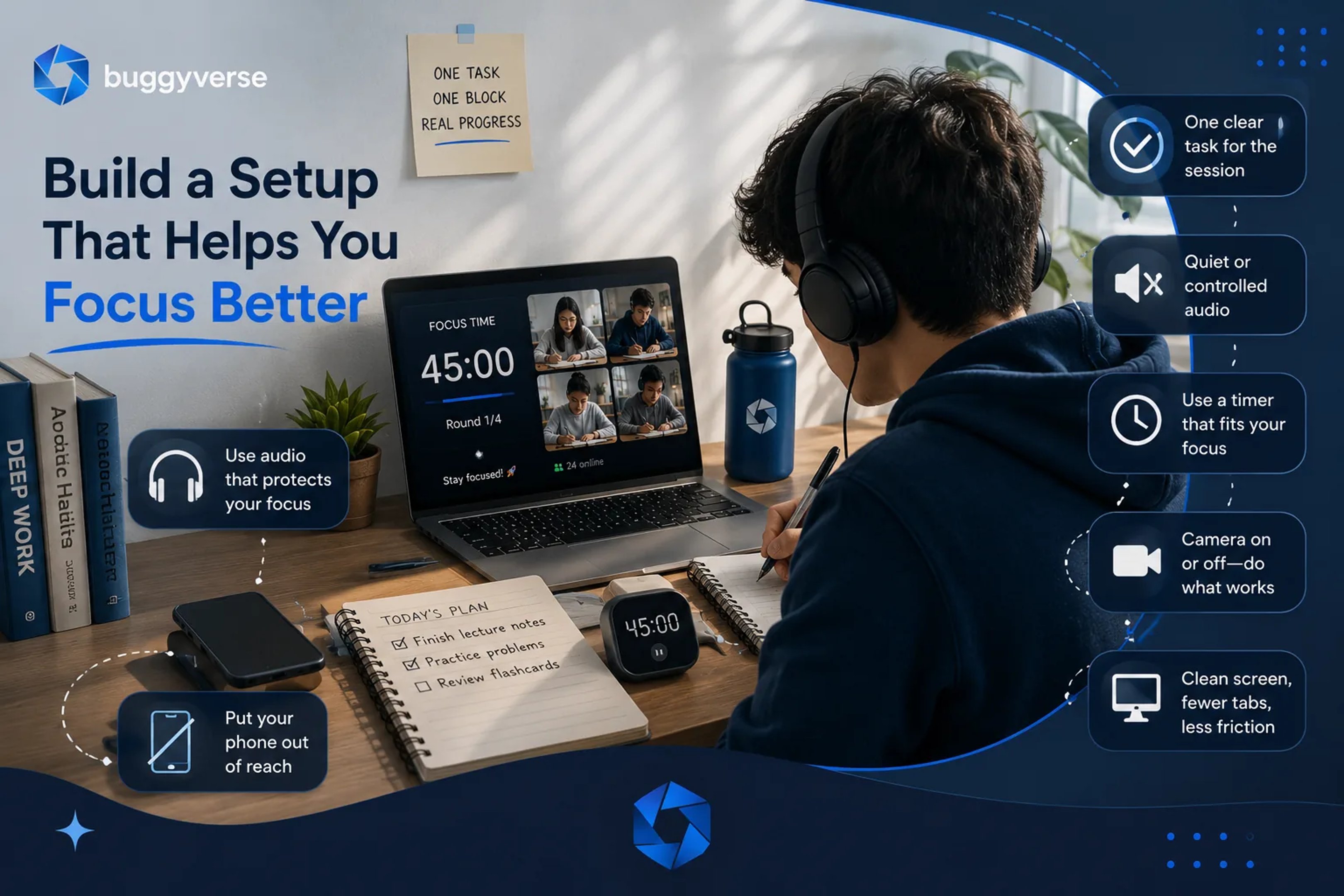
Best Virtual Coworking Setup for Students